info@ugandacancersociety.org
9:00 A.M - 5:00 P.M

At the beginning of 2026, specifically in February, we designed and implemented a social media campaign, “The 28 Unique Days of Unity,” inspired by the Union for International Cancer Control (UICC) World Cancer Day theme,United by Unique.
We collected different stories that we shared daily across the Uganda Cancer Society’s social media platforms. We featured cancer patients, survivors, caregivers, healthcare workers and policymakers, each sharing their unique experiences and perspectives on cancer.
But what stood out most for us was not just the stories we collected.It was what many of the cancer patients and survivors said about how organisations engage with them.
Several expressed a feeling that organisations sometimes reach out to them primarily when their stories are needed, rather than out of a genuine commitment to supporting them.
Some felt that their experiences and conditions were being used to fulfil project requirements, attract funding or demonstrate organisational impact. In their words, they sometimes felt “paraded” when it suited an organisation’s interests.
In fact, some declined to participate in our campaign for precisely this reason.
When we asked what would make them feel genuinely and meaningfully engaged, these were some of their responses;
They wanted platforms where their voices could truly be heard and influence decisions. They wanted more affordable cancer medicines and better access to care. They wanted to be recognised and fairly facilitated when invited to share their lived experiences.
But there was something else.
Many of these survivors are already doing incredible work in their communities, often voluntarily and with very limited support.They help newly diagnosed patients navigate the healthcare system, offer counselling and emotional support, identify possible signs and symptoms of cancer, encourage community members to seek medical attention early, and support patients to remain on treatment.
People in their communities already turn to them for guidance, reassurance and information.
Yet many of these survivors have lost their employment or sources of income during their cancer journey. Even after recovery, some continue to experience difficulties securing employment.
They therefore raised an important question:
How can they continue using their experiences to support their communities without becoming financially constrained in the process? And perhaps, more importantly, how can organisations recognise their contributions beyond simply inviting them to tell their stories?
Interestingly, this is consistent with what the World Health Organization (WHO) describes as meaningful engagement of people with lived experience in their framework for meaningful engagement of people living with noncommunicable diseases, and mental health and neurological conditions
Meaningful engagement goes beyond consultation or inviting people to share their experiences at events. It involves recognising lived experience as a form of expertise and creating opportunities for people to participate in planning, designing, implementing and evaluating programmes that affect their lives.
Research also emphasises the importance of involving people with lived experience in decision-making, equipping them with the necessary knowledge and skills, providing fair compensation for their contributions, and demonstrating how their input has influenced decisions.
In other words, meaningful engagement should not end with collecting a story. It should create opportunities for influence, participation, leadership and shared ownership.
Which for us also raised another important question.
How do we bridge the gap between the limited access to reliable cancer information among cancer patients and the wealth of lived experience and practical knowledge that cancer survivors have accumulated?
And how do we structure, strengthen and support the information and guidance survivors are already providing in their communities so that it is accurate, reliable and beneficial to the people they serve?
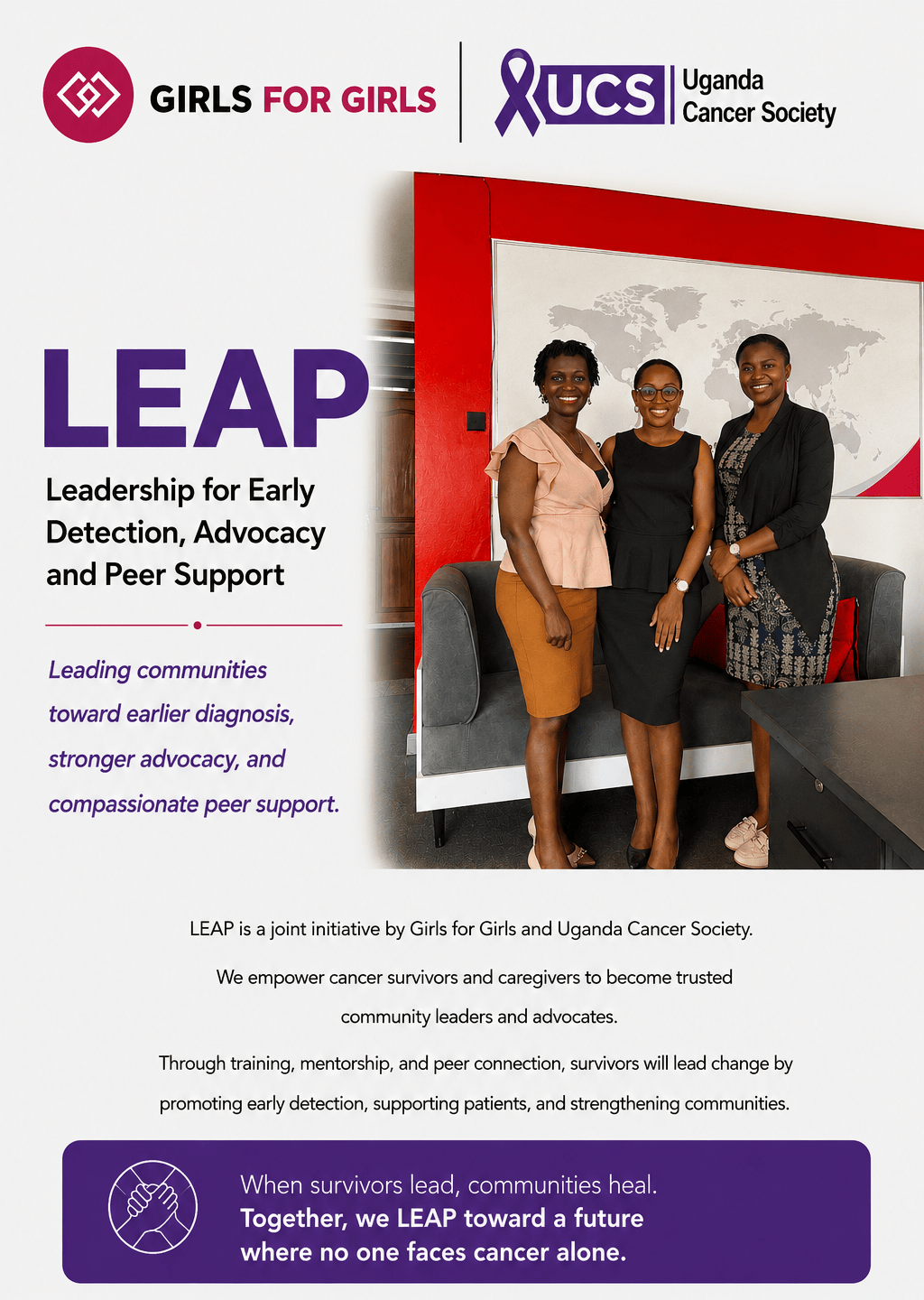
This thinking contributed to the development of LEAP (Leadership for Early Detection, Advocacy and Peer Support), an initiative by the Uganda Cancer Society in partnership with Girls For Girls(G4G).
We were delighted when G4G agreed to partner with us to mentor and equip cancer survivors with the knowledge, confidence and leadership skills to advocate for themselves and others, support fellow patients and become champions for better cancer care.
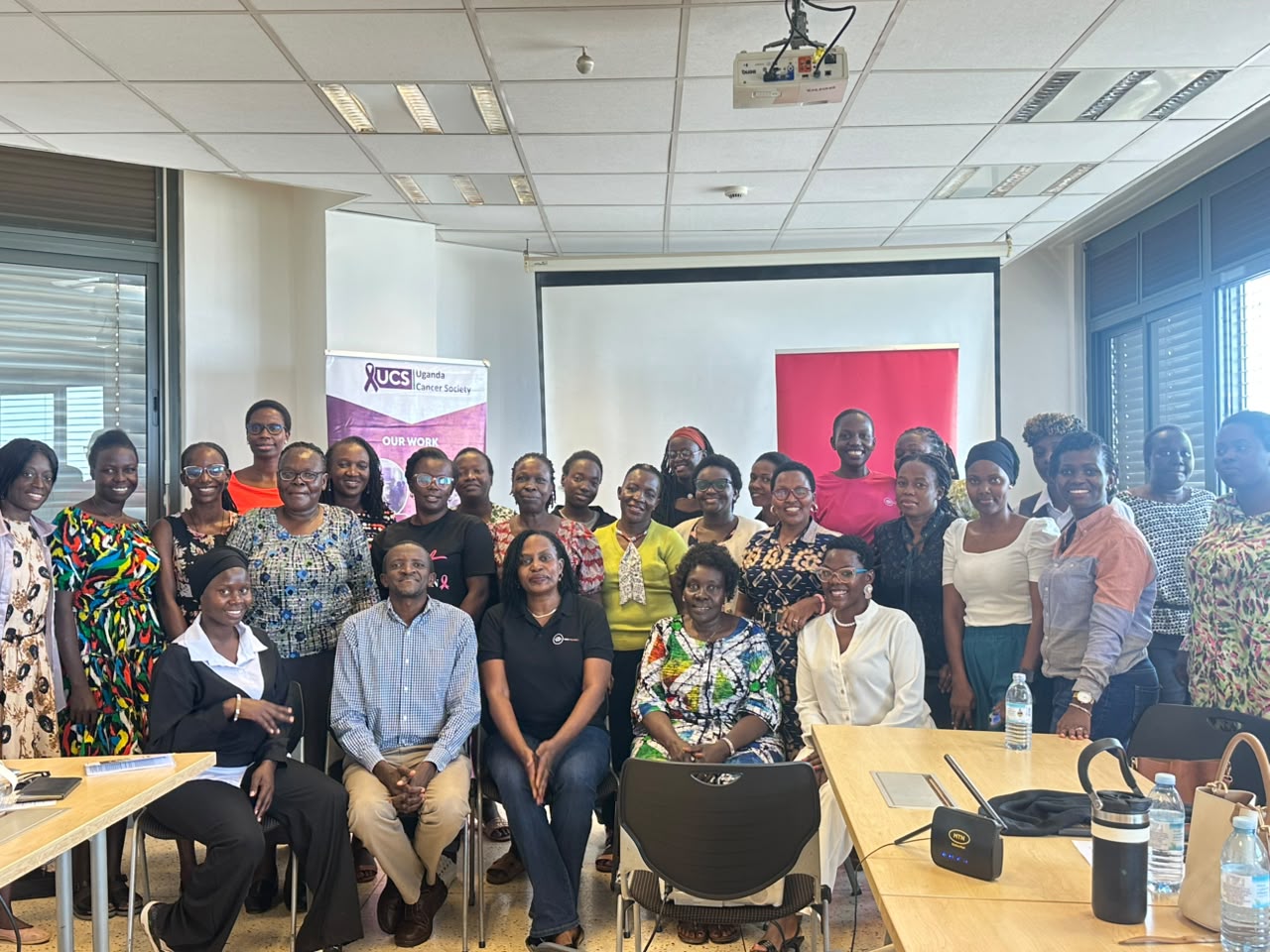
On 22 August 2026, we held our inaugural session,“Building Trust and Understanding Cancer,” facilitated by Dr. Noleb Mugisha from the Uganda Cancer Institute and Ms. Juliet Kakoma from Finance Trust Bank.
It was such a fun-filled and enriching session!
Beyond the knowledge gained, what particularly stood out was the opportunity for survivors to connect, build their own networks and find a safe space where they could share their experiences, challenges and victories with people who truly understood their journeys.
It was almost like a **peer-support sharing circle**, where participants could draw strength, encouragement and a sense of belonging from one another.
Watch a glimpse of this experience here:https://vt.tiktok.com/ZSgayaNmA/
Of course, none of this would have been possible without the commitment of our partners.
We are grateful to G4G and the Uganda Cancer Institute for partnering with us in delivering this training, Stanbic Bank for the financial support received, and the generous individuals within our networks whose contributions have helped cover transport refunds for in-person sessions for the survivors.
These contributions may seem small, but they are helping make survivor participation possible.
We still have three sessions ahead of us, with graduation scheduled for February 2027.
And you, too, can be part of this journey.
We need your support, not just to successfully deliver the remaining sessions, but, more importantly, to develop a network of Cancer Survivor Champions, who can:
– Support fellow patients in navigating the healthcare system, from their communities to appropriate centres of care.
– Raise awareness in their communities, improve recognition of possible cancer signs and symptoms, and encourage early diagnosis and treatment.
– Provide informed peer support and guidance to people navigating a cancer diagnosis.
– Advocate for more accessible, affordable and responsive cancer services.
– Use their lived experiences to inform and influence the design and improvement of cancer programs.
Because who better understands the needs and challenges of cancer patients than those who have walked that journey themselves?
For us at the Uganda Cancer Society, this is what meaningful engagement of people with lived experience, as championed by WHO, should look like in practice.
Not just inviting survivors to share their stories, but investing in their capacity, recognising their expertise, creating opportunities for their voices to influence decisions, and supporting them to become leaders and agents of change in their communities.
We must move from simply giving survivors a platform to tell their stories to giving them opportunities to shape the programmes, services and decisions that affect their lives.
To support this cause and walk this journey with us, please use the link below:
🤝 https://akabbo.com/c/leap-leadership-for-early-detection-advocacy-and-peer-support/
Together, we can turn lived experience into leadership, stronger patient support and more responsive cancer care.
#NothingAboutUsWithoutUs.


Comments (0)